
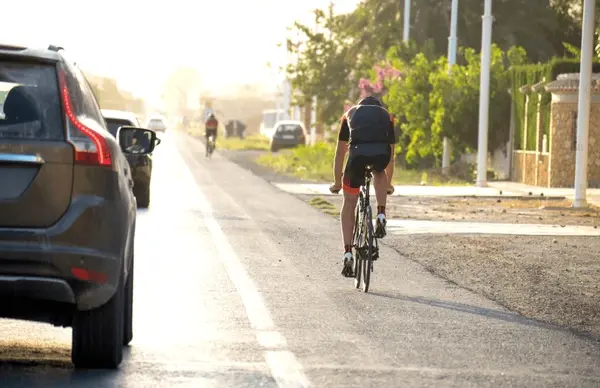
Under California law, a bicycle is not considered a vehicle in the matter of traffic rules and regulations, but bicycle operation is still governed by many of the same traffic laws. Bicycle riders are considered to have the same rights as drivers to use of the streets, but the specifics regarding bicycle rights and responsibilities can be confusing. By statute, “Every person riding a bicycle upon a highway has all the rights and is subject to all the provisions applicable to the driver of a vehicle by this division … except those provisions which by their very nature can have no application.” (See California Vehicle Code Section 21200).
Injuries to bicycle riders present many unique legal issues. These include the following:
1.) Government immunities on public bike paths;
2.) State laws concerning bicycles;
3.) City laws concerning bicycle riding; and
4.) Injury concerns for minors.
1.) Government Immunities for bike paths:
Those who choose to avoid main thoroughfares by taking to trails and bikeways may be at even greater risk, however, because no city, county, or state government entity in California bears any legal responsibility for maintaining safe riding conditions on a paved bike path. This odd result stems from court rulings that define the word “trail” in Government Code section 831.4 to include paved bike paths. The leading case is Prokop v. City of Los Angeles, where David Prokop pursued litigation against the City of Los Angeles when a flawed design for a bike trail caused him to collide with a chain link fence, resulting in a severe laceration to his forehead, loss of consciousness, and neck pain.
Because of this absolute immunity held by the government in regard to paved bikeways and trails, our law office was unable to help a person in a similar case who was seriously injured by the poor design and maintenance of a paved bike path here in Oceanside, California.
Bike lanes in streets, however, are governed by different laws than bike paths. Our office won an $80,000 recovery for a female bicycle rider who sustained facial wounds and fractured teeth when she encountered a raised utility manhole in the bike lane of a busy street in Carlsbad, California, which caused her to lose control and be thrown off her bicycle. In another bicycle rider case, our office won a $125,000 recovery for a woman who suffered a fractured elbow when she rode her bicycle over an unmarked speed bump on a road within a mobile home park in Oceanside, California, which caused her to lose control and be thrown off her bicycle.
2. State Laws concerning bicycle riding:
To improve bicyclist safety, California recently enacted Vehicle Code Section 21760(c) requiring motorists to maintain a three-foot space cushion when passing a bicyclist.
When operating a bicycle, it is important to remember that the State laws overrule local regulations. The California Vehicle Code Section 21 provides:
“Except as otherwise expressly provided, the provisions of this code are applicable and uniform throughout the State and in all counties and municipalities therein, and no local authority shall enact or enforce any ordinance on the matters covered by this code unless expressly authorized herein.”
3. City Laws concerning bicycle operation:
Due to the proliferation of children riding fast electric bicycles on roadways and disobeying the rules of the road, many cities are enacting ordinances prohibiting such activity by children under a certain age. It is uncertain if such ordinances violate state law.
Local ordinances also govern bicycle use on a sidewalk. In our experience, law enforcement personnel frequently misinterpret laws about bicycle use. In one case, the police officer found a bicycle rider who was hit by a car at fault for riding in the crosswalk in violation of a municipal code. But that code cannot be used as a basis for finding the bicycle rider to be negligent, because that code is intended only to protect pedestrians, not vehicle drivers.
Also, in roadways without bike lanes, there are two primary rules governing positions on the roadway. First, all traffic on the highway, including bicycles, must travel on the right-hand half of the roadway. Second, all slower traffic, including bicycles, must keep farther to the right.
4. Injuries to child bicycle riders:
Often, child bicycle riders are involved in crashes with vehicles. These can involve serious lifelong injuries for the child involved. Thus, we recommend a review of the facts by an experienced bicycle injury accident attorney. The issues involved include the vehicle driver's attentiveness, speed, and awareness of children in the vicinity. Other issues can include the age of the child, whether the child was wearing a required helmet, and whether the child had adult supervision at the time of the crash.
The purpose of traffic law is to promote safe and efficient traffic flow. This includes preserving the bicyclists' rights to share the roadways and preventing local authorities from limiting such rights.
A bicycle injury claim involves many unique and sometimes complex issues. It is always a good idea to consult an attorney who is experienced in handling bicycle injury claims. The Kohn Law Office provides a free initial consultation on injury claims, and all cases are handled on a contingency basis with no attorney fee unless there is a recovery. If you have questions, we would love to help. Call us at 760-721-8182.

Comments
There are no comments for this post. Be the first and Add your Comment below.
Leave a Comment